Samuele Ongaro MA, BA (Hons)
Postgraduate Researcher (University of Southampton)
https://orcid.org/0009-0008-9629-4678
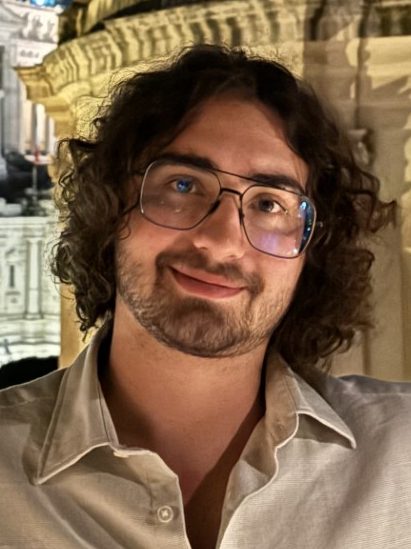
Samuele is a Postgraduate Researcher at the University of Southampton under the Intelligent Oceans doctoral programme, funded by the Leverhulme Trust through the Southampton Marine and Maritime Institute. He is currently in charge of the organisation of the CAHO Seminar Series.
Samuele’s research focuses on Submerged Landscape Archaeology, in particular looking at palaeolandscape changes in the Holocene and human-environment interactions. He mainly focuses on the Adriatic region, where he is investigating how submerged landscapes can help better understand the Mesolithic-Neolithic Transition in the area.
Biography
“Hi, my name is Sam! I am a submerged landscape archaeologist with an interest for palaeolandscape reconstructions and human-environment interactions throughout the Holocene.
I graduated from the University of Southampton in 2022 with a degree in BA (Hons) History and Archaeology. During my studies, I first came across the topic of submerged landscapes and was greatly fascinated by it. I thus proceeded to write my dissertation on responses of Mesolithic societies to sea level rise around Northwestern Europe, thanks to which I received a first-class degree.
In 2023 I graduated with distinction from the University of Southampton with a degree in MA Maritime Archaeology. This not only allowed me to develop key skills in underwater and intertidal investigations’ techniques (e.g., survey, excavation, GIS, marine geophysics), but it also granted me the possibility to further my research on submerged landscapes. While maintaining my interest for palaeolandscape research all around Europe, I decided to focus on a region poorly studied but with great potential, the Adriatic Sea. My master’s thesis focused on an assessment of potential for submerged prehistoric sites in the Northern Adriatic, both at a theoretical and taphonomical level, integrating participants survey to assess local knowledge.
Through my PhD I am expanding on my master’s research, as my project aims at using the Northern Adriatic as a case study to demonstrate the importance of detailed palaeolandscape reconstructions to improve our knowledge of key archaeological issues. I am currently collaborating with marine geophysicists and geologists at the OGS (National Institute of Oceanography and Applied Geophysics, Trieste, IT) to produce palaeolandscape reconstructions for the Northern Adriatic, using a combination of unpublished sub-bottom data, published sedimentary cores, and sea level data. These reconstructions are going to be pivotal in understanding not only key issues in Mesolithic archaeology, but also to produce palaeoecological models of the transition to farming in the area.
I am conducting my PhD by publication, meaning that you can read about my research as I publish my results (see below). I have also presented at several international conferences, and in 2024 I organised a session at TAG on the importance of the human dimension in submerged landscape archaoelogy, which brought together several experts in the field.
During my PhD I have been assisting with many activities here at the university, including teaching, fieldwork, open days, and the CAHO seminar series, for which I am in charge of the organisation of the seminars.”
Research Groups
Centre for the Archaeology of Human Origins
Centre for Maritime Archaeology
Recent Publications
Ongaro, S., Sturt, F., & Bynoe, R. (2025). The Mesolithic-Neolithic Transition in the Northern Adriatic: Radiocarbon Chronologies and Models of Neolithization. Journal of Mediterranean Archaeology, 38(2), 199-225. https://doi.org/10.1558/jma.35009
Manen, C., Leppard, T. P., Ongaro, S., Sturt, F., Bynoe, R., Forenbaher, S., Boschian, G., Vukosavljević, N., Radić, D., Radović, S., & Miracle, P. T. (2025). Adriatic Explorations: Debating Mobility and Agriculture in the Prehistoric Central Mediterranean. Journal of Mediterranean Archaeology, 38(2), 249-266. https://doi.org/10.1558/jma.35011