
Dr Emily Watt
Postdoctoral Researcher (University of Cambridge)
emily.watt@aol.com
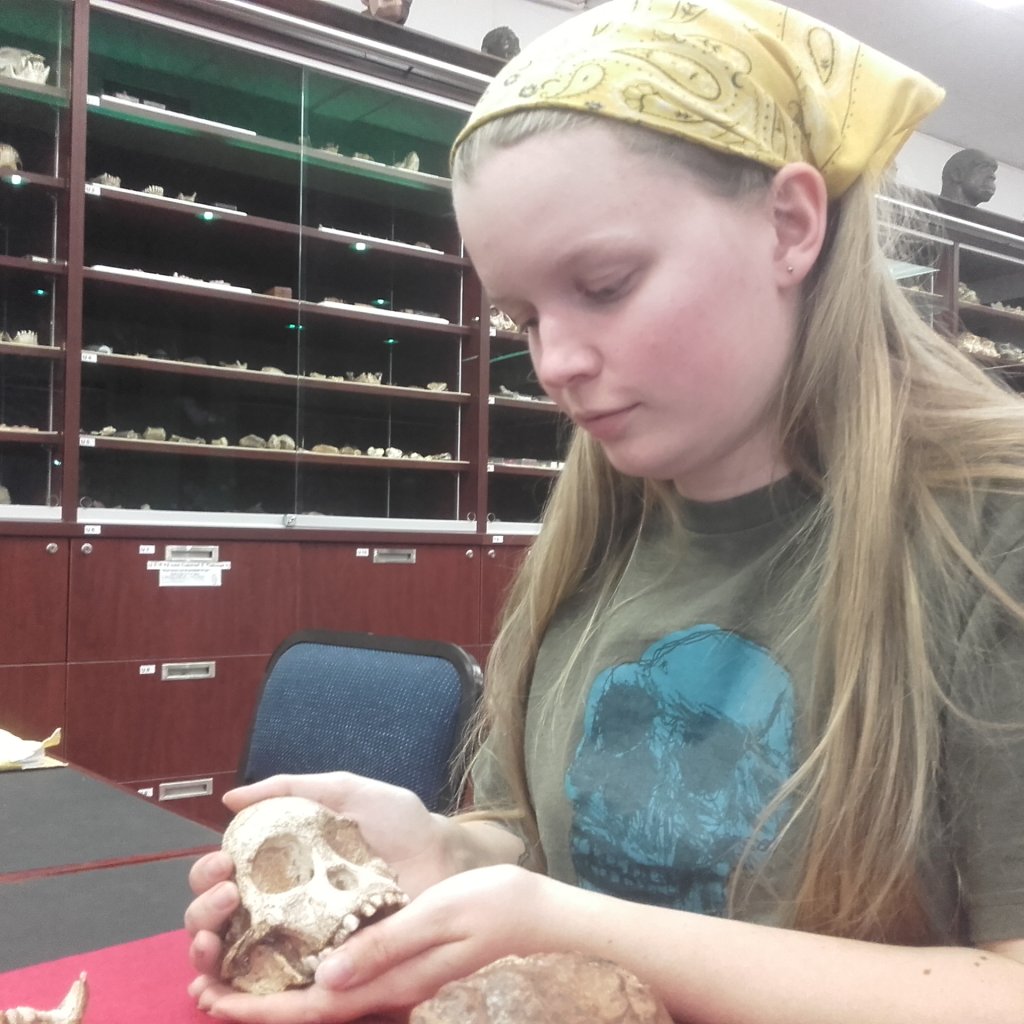
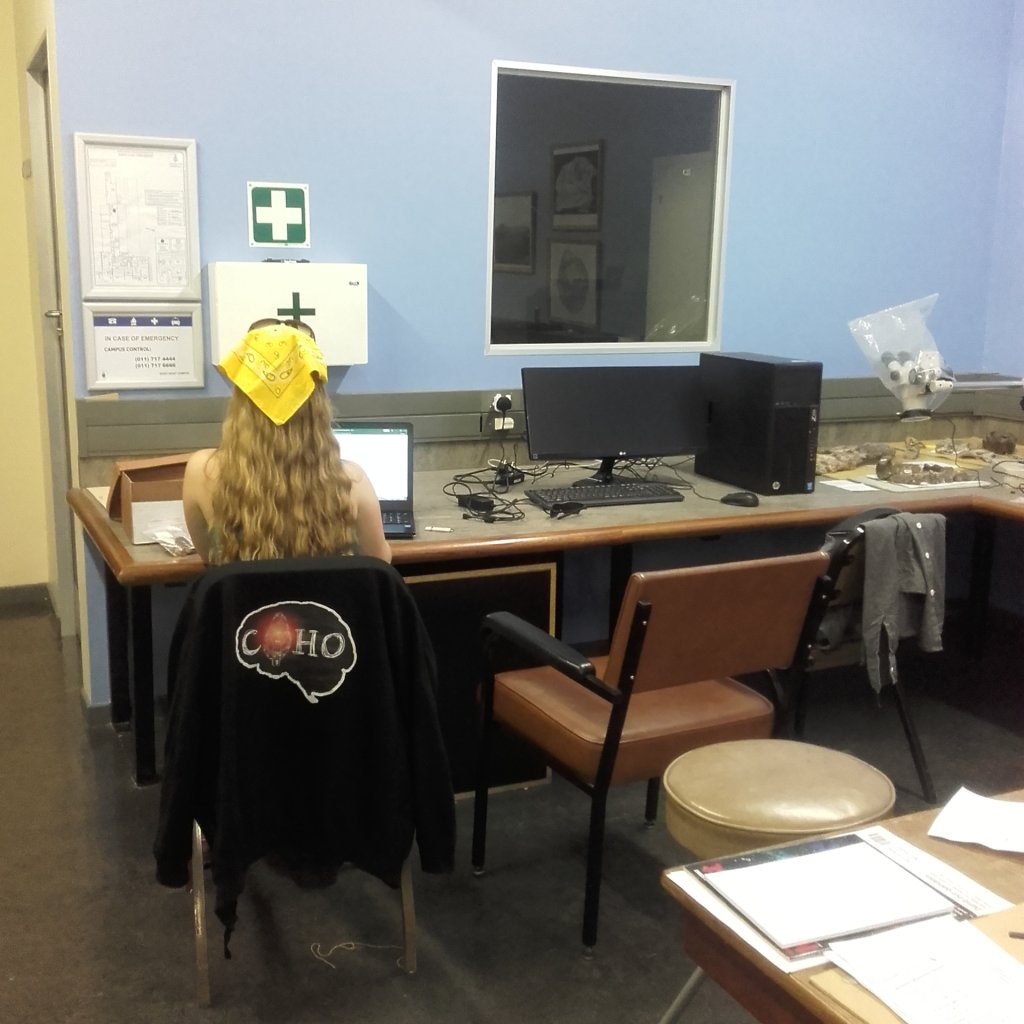
I was an undergraduate student at the department between 2015 and 2019, on the BA Archaeology and Anthropology with a Year Abroad course. I was very quickly involved in CAHO, helping out with conferences, attending seminars and talking at outreach events and open days. For my third year, I worked at the University of the Witwatersrand in Johannesburg, South Africa as a Visiting Researcher. Whilst there, I visited and worked at many sites at the Cradle of Humankind including Sterkfontein, Swartkraans, Makapansgat, Kromdraai, and Drimolen. I helped catalogue and curate hominid fossils, co-created the first digital catalogue of the Sterkfontein Member 4 and 5 faunal collection, worked on museum outreach events, surveyed at Swartkrans, led a student tour group around Sterkfontein, collected my dissertation data, and also made lots of friends and contacts along the way!
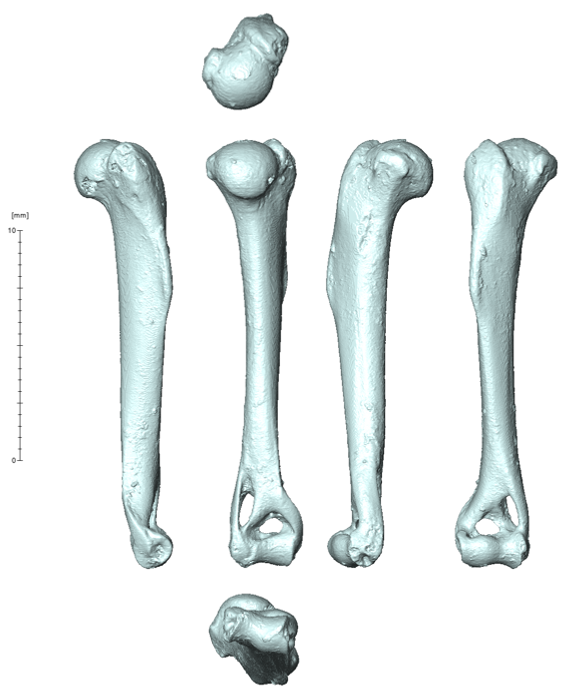
My undergraduate dissertation was titled “Investigating the potential of a taxon-free approach to the functional morphology of micromammal postcrania in the archaeological record and implications for palaeoenvironmental reconstruction” and was supervised by Professor John McNabb. This was the first investigation into the postcranial remains of micromammals (e.g. mice, shrews, voles) using shape-based methods to see if there was any information they could provide to fossil-bearing sites. I was lucky enough to have collected my data from the Sterkfontein collections, which I micro-CT scanned during my visit to the University of the Witwatersrand. I was able to show that the postcranial fossils were distinct enough to be of potential palaeoenvironmental use, by tying adaptations to specific locomotory types to environmental reconstructions.
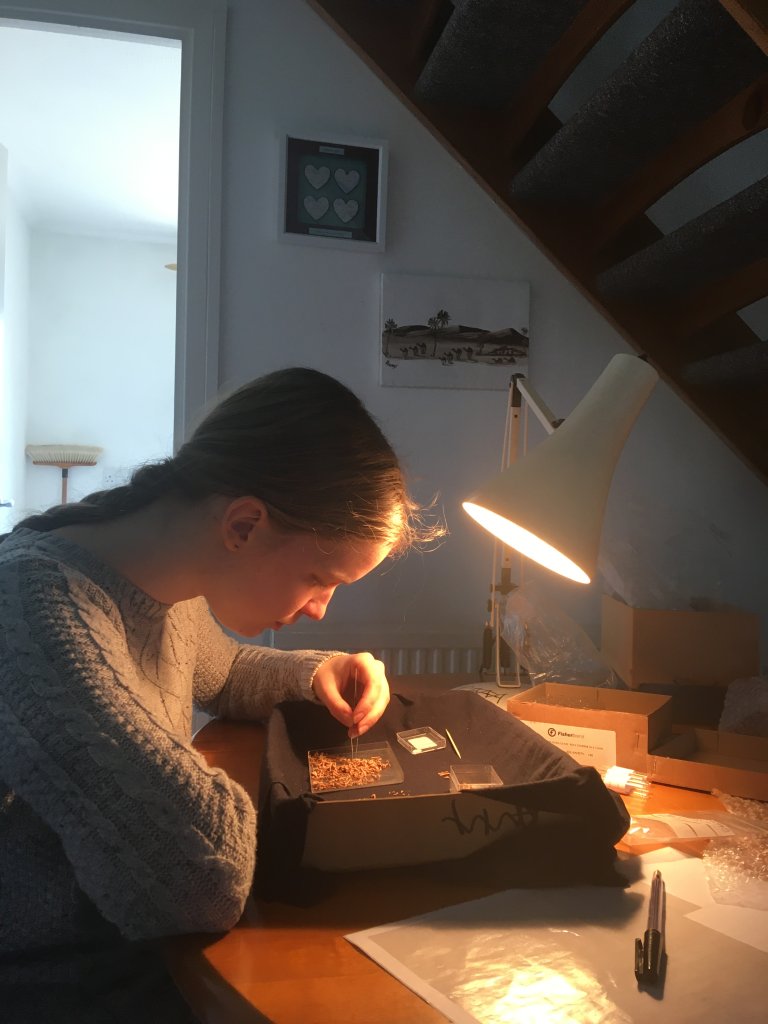
Since being at Southampton, I completed my Masters degree at Royal Holloway University of London between 2019 and 2020. I was awarded the Bedford Society Scholarship to study MSc Quaternary Science in the Geography Department (where Professor Clive Gamble once worked!). I continued the theme of my undergraduate research in my Masters dissertation, which was titled “Fossil micromammalian postcranial analysis for palaeoenvironmental reconstruction: a case study from Gully Cave, Somerset” and supervised by Professor Danielle Schreve. I was fortunate to be able to borrow part of the small mammal reference collection from the Southampton Archaeology department, alongside a microscope and lights so I could work on my research from home during lockdown. I used a comparative collection to create the first descriptions of the common micromammals that appear at fossil-bearing Quaternary (Pleistocene and Holocene) sites in the UK.
My PhD was based at the Natural History Museum and University College London between 2020 and 2025, supervised by Professor Anjali Goswami, Dr Ryan Felice, and Dr Laura Porro, and funded by the London NERC DTP on their environmental sciences programme. My research topic was “Morphological evolution of the tetrapod lower jaw”. This research used the same type of morphological analysis I have been using since my undergraduate research, but looking at a far greater time depth and breadth of species than I ever have: tetrapods are limbed vertebrates that diverged from ‘fish’ around 390 million years ago, and encompass all living limbed vertebrates (mammals, reptiles and birds, and amphibians) and their fossil ancestors. I completed the first synthetic review of the structure of the lower jaw across Tetrapoda, and modelled structural and morphological evolution of the lower jaw across and between major clades and through time. I found more diversity in structural composition of the lower jaw at the base of Tetrapoda, and more variation in shape towards the tips (especially in mammals and turtles).
I am currently a Postdoctoral Researcher at the McDonald Institute for Archaeological Research at the University of Cambridge. I work on an exciting multidisciplinary project “Small Performances” which looks at the typographic punches of 18th century English letterpress printer John Baskerville. Alongside colleagues looking at the craft of forging the typographic punches, designing digital revival fonts, and digitally archiving a selection of Baskerville’s works, I look at the variation in the shapes of Baskerville’s letters, both on the punch faces and in his printed texts.